Iconography
An image written for prayer
What an icon is, how it is read, and how it is made, from the wooden panel to the last touch of light.
What is an icon?
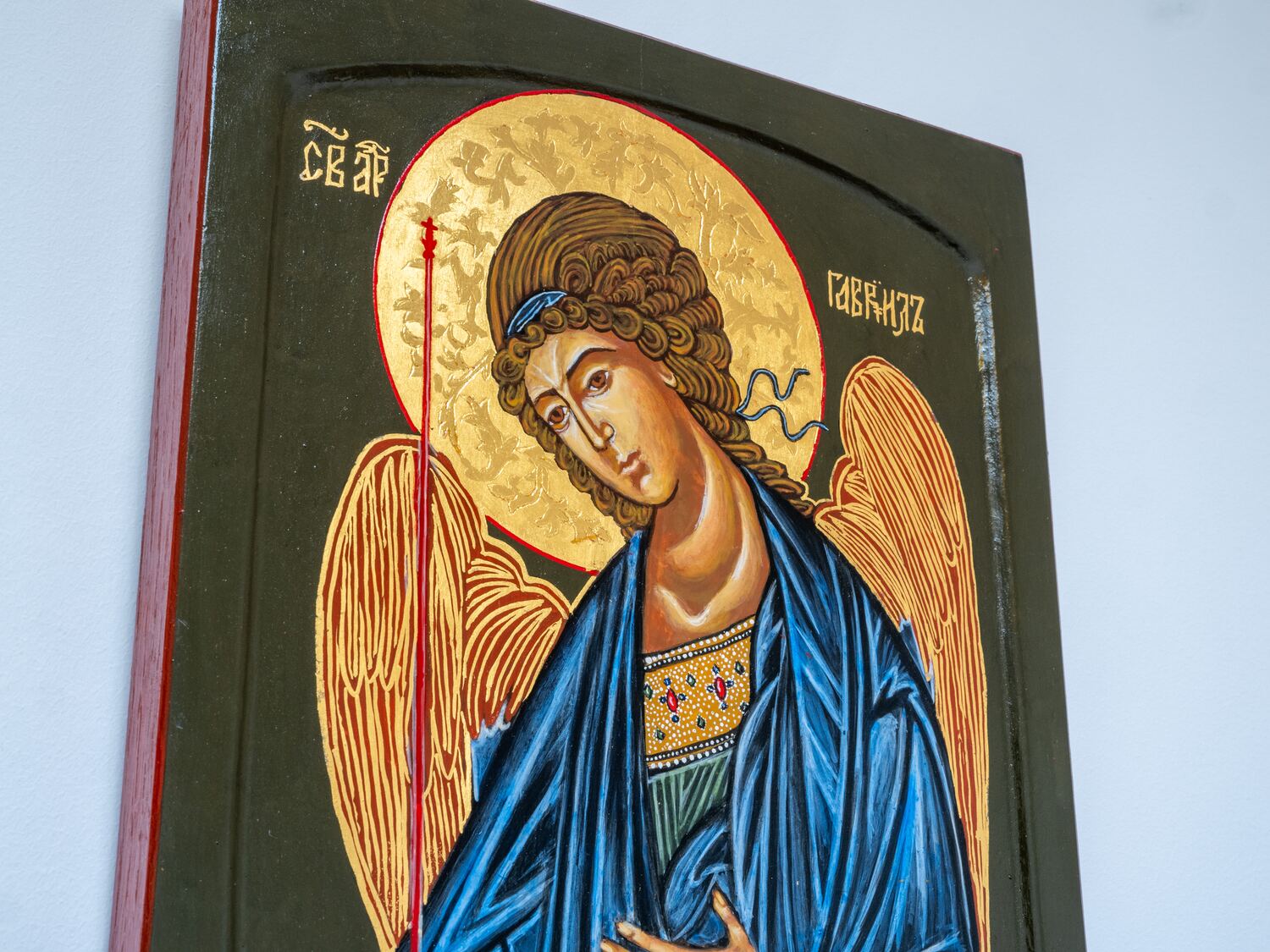
The word icon comes from the Greek eikōn, “image”. Yet an icon is not a religious painting in the usual sense. It does not tell a story or show a landscape; it makes present the one it depicts. It is often called a window onto the invisible.
That is why one speaks of writing an icon rather than painting it: in Greek, the same verb, graphein, means both to write and to paint. The icon is read like a text, in a language of forms and colours that has been handed down for centuries.
An icon is made for prayer. In 787, the Second Council of Nicaea affirmed that the honour given to the image passes to the one it represents.
The language of the icon
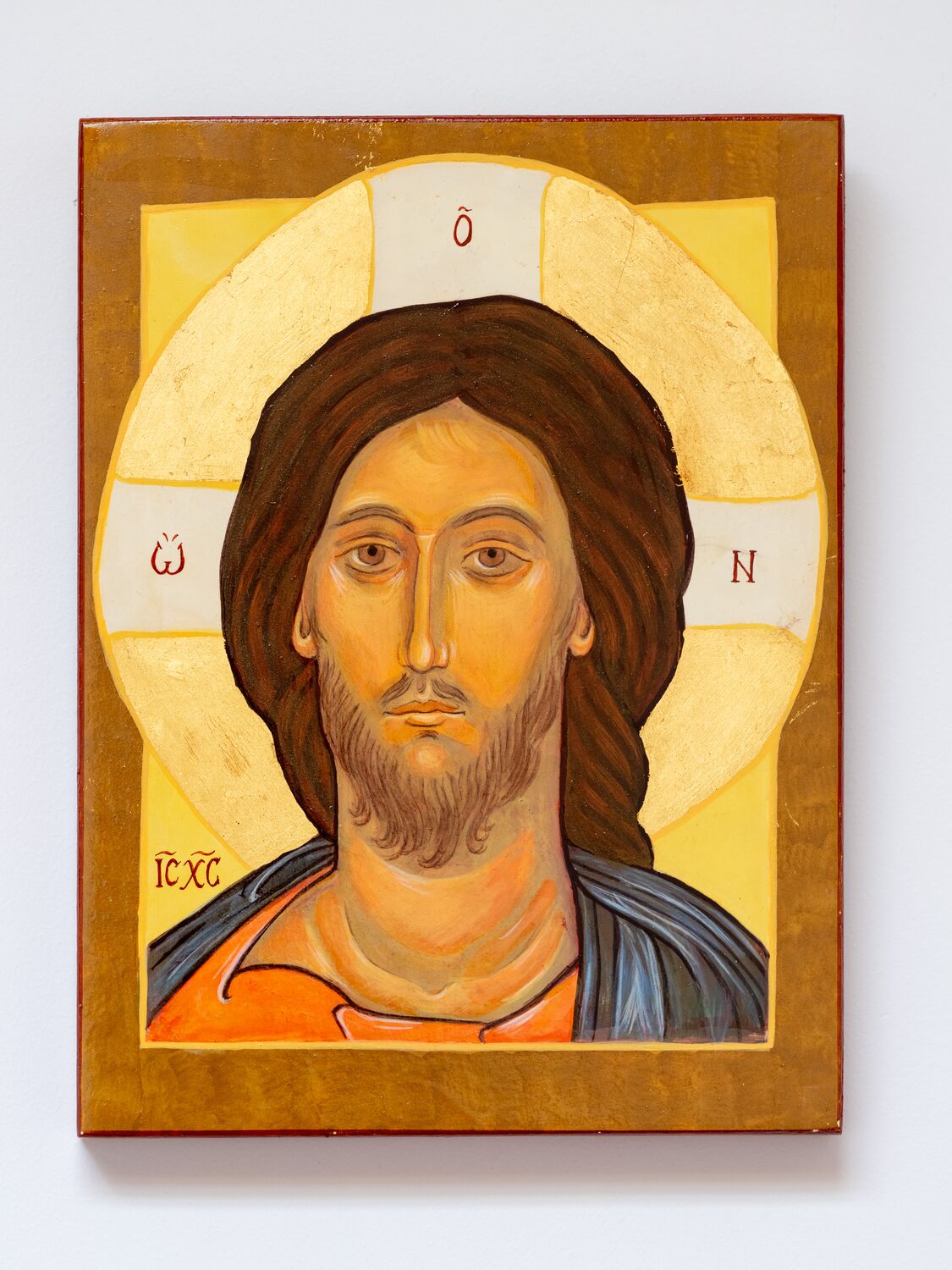
In an icon there are no cast shadows. Light does not fall from a window; it seems to come from within the figures, the light of a transfigured world.
Perspective is often reversed: lines open toward the viewer instead of meeting in the distance, as if the scene came to meet the one who prays.
Faces follow their own proportions: large eyes that have seen God, a long, fine nose, a small closed mouth that speaks through silence. Every figure is named by an inscription; traditionally, an icon is not complete until its name is written.
Egg tempera
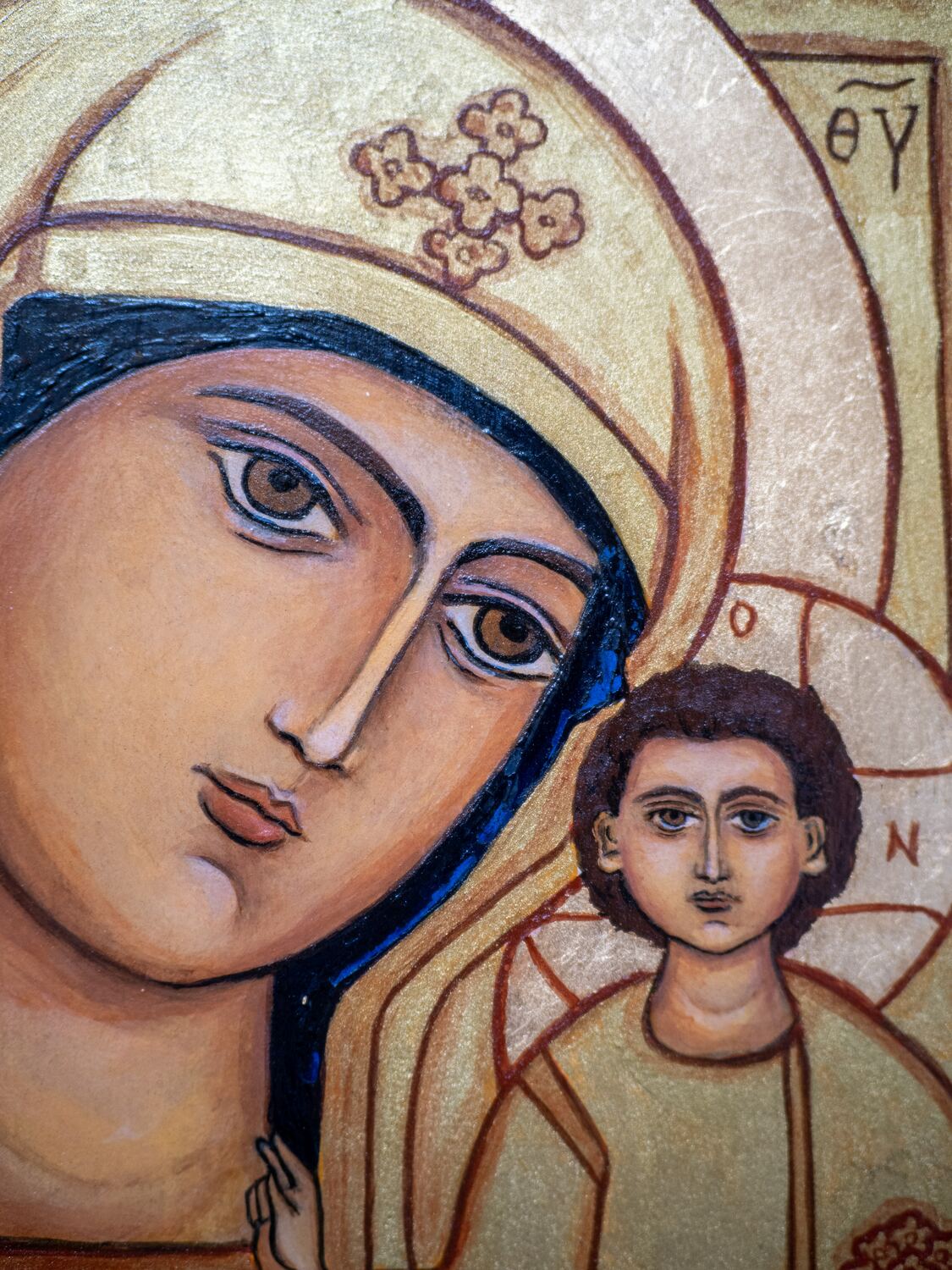
The colours of an icon are made from pigments, earths and minerals ground into powder, bound with an emulsion of egg yolk and a little water and wine or vinegar. This is egg tempera, one of the oldest painting techniques.
The paint is applied in many thin, almost transparent layers, from the darkest tone to the lightest. The figure literally comes out of the darkness toward the light. The last touches, the white highlights around the eyes and on the faces, are the moment the icon comes to life.
Once dry, the icon is protected with a varnish, traditionally olifa, a boiled linseed oil, which deepens the colours.
Gilding
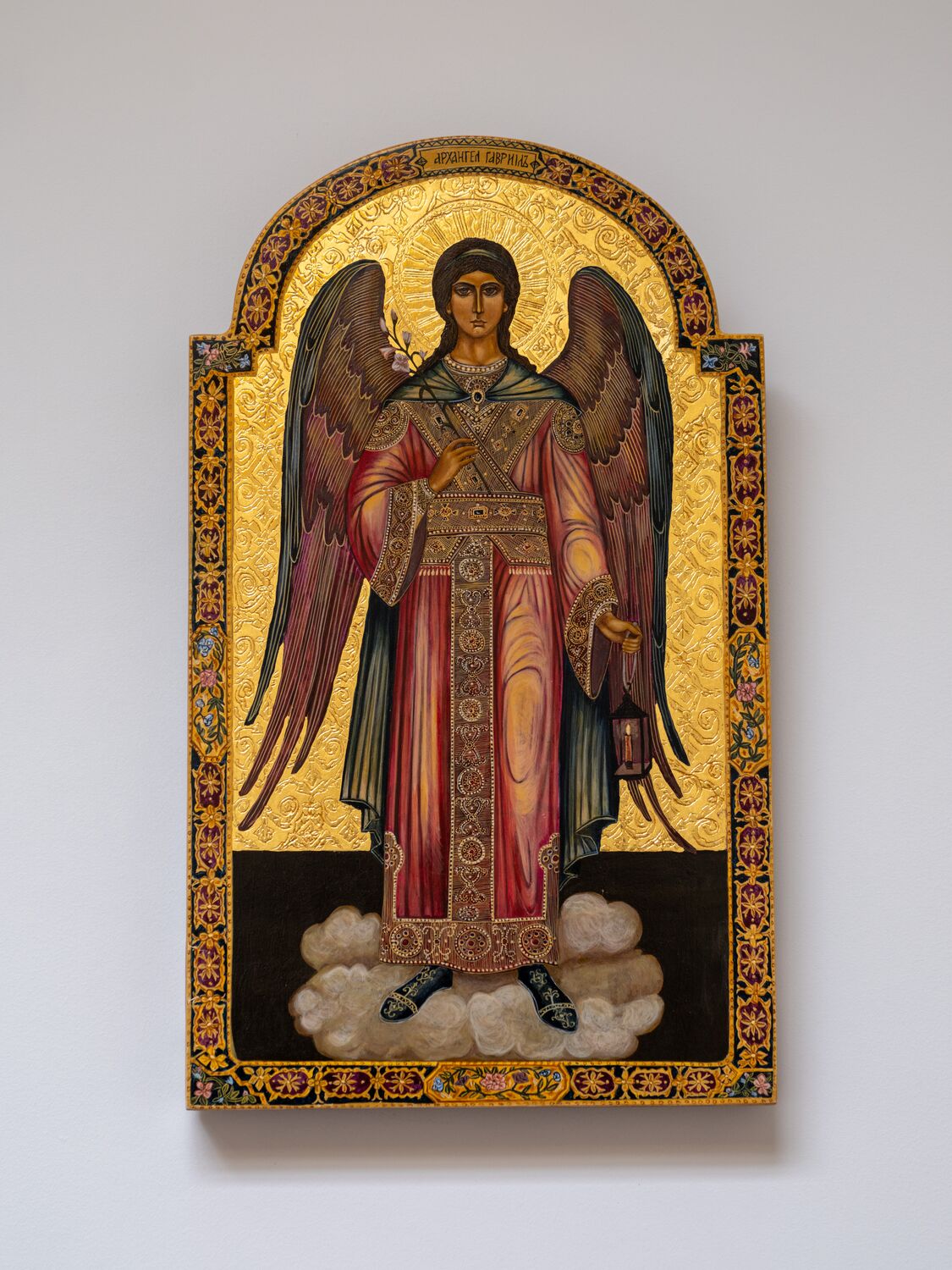
Gold is laid before the colours. The gold leaf, thinner than a sheet of paper, is placed on a layer of bole, a fine red clay, or on an adhesive, then burnished with an agate stone until it shines.
In the icon, gold is not a decoration and it does not describe a sky. It evokes the uncreated light of God, the glory of the heavenly world in which the saints already live. That is why the halos and often the whole ground are gilded.
How is an icon born?
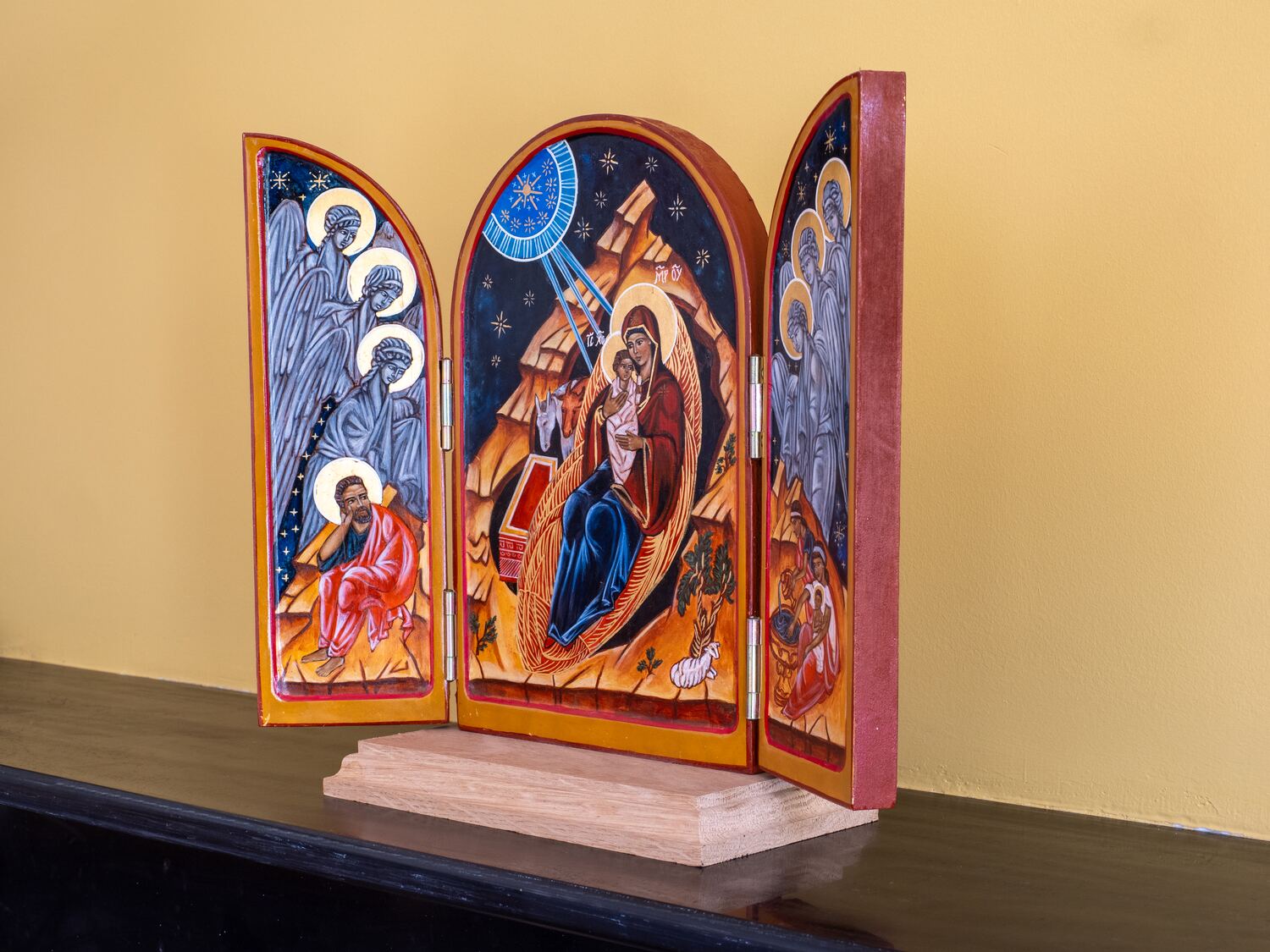
- The panel. A seasoned wooden board is covered with linen, then with many thin layers of gesso made from chalk and animal glue, each sanded smooth.
- The drawing. The figure is drawn after a traditional model, then the main lines are lightly incised into the gesso.
- The gilding. Gold leaf is laid on the halos and the ground, then burnished.
- The colours. Egg tempera is applied from the darkest tones to the lightest, garments first, faces and hands last.
- The inscription. The name of the saint or the feast is written on the icon.
- The varnish. Once the paint is fully dry, the icon is varnished to protect it.
Between each stage, time is needed: for the layers to dry, and for the icon to mature slowly under the hand.
Saints and symbols
Every detail of an icon means something. Here are some of the signs you will find in my icons.
- The halo
- A circle of gold around the head: the sign of holiness, of a person filled with God's light.
- Ὁ Ὤν
- “He who is”: written in the cross of Christ's halo, the name God reveals to Moses.
- IC XC
- The first and last letters of Jesus Christ in Greek.
- ΜΡ ΘΥ
- Μήτηρ Θεοῦ, Mother of God: the name of Mary on her icons.
- Red and blue
- Often read together: red for divinity, blue for humanity. Christ wears red beneath blue; Mary, blue beneath red.
- Three stars
- On Mary's veil: her virginity before, during and after the birth of Christ.
- Wings
- The heavenly nature of the angels and their role as messengers.
- The staff
- The messenger's staff of the archangels, sign of the mission entrusted to them.
- The book
- The Gospel held by Christ, or the writings of a saint, like Hildegard's Scivias.
- The dragon
- Evil overcome, beneath the lance of Saint George or Saint Michael.
- The birds
- With Saint Francis, all of Creation giving glory to God.
- Gold
- The uncreated light of God and the glory of the heavenly world.